The short answer
Someone seeing a product price in an advertisement should understand the order’s total cost before an unexpected checkout charge. Explain the shipping threshold, eligible regions and products, and packaging scope using real operating conditions. A higher threshold does not automatically improve profit; review order contribution and fulfilment workload together.
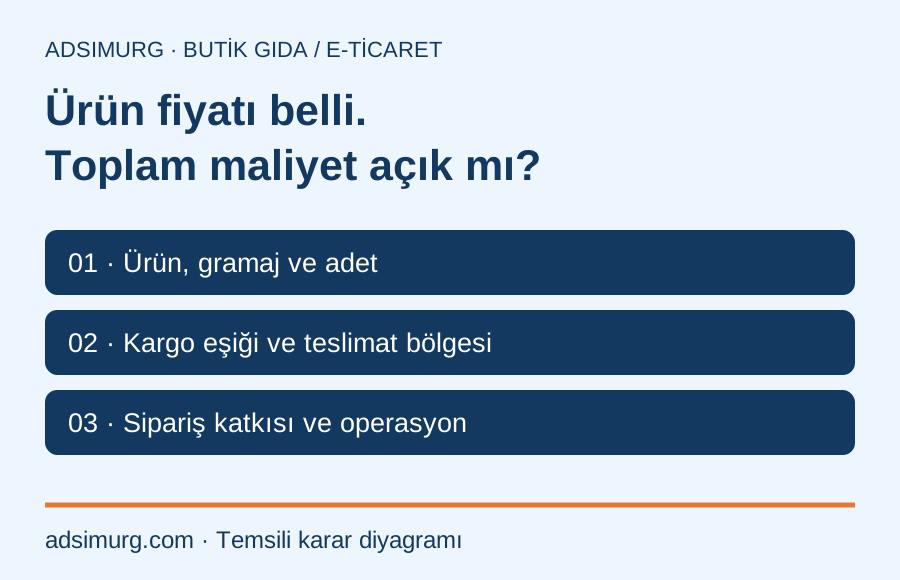
| Item | Clarify | Decision record |
|---|---|---|
| Product | Quantity, weight and unit price | Actual selected variant |
| Delivery | Region, fee and threshold | Applicable order conditions |
| Operations | Packaging and transport needs | Verified order cost |
Confirm which products can reach each region
A small business selling honey, dried foods or regional products may need different packaging and delivery arrangements for different items. List its actual product and logistics conditions. Verify any temperature-control or special-packaging requirement with the operations owner rather than assuming it. Avoid unsupported health, organic or certification claims. This guide does not provide food-safety standards or a legal compliance assessment.
Separate product price from delivery cost
Google Merchant Center’s price guide requires the submitted product price to agree with the landing page and checkout. It explains that additional costs such as shipping belong in the relevant separate fields. First verify that the same selected quantity and weight have a consistent price throughout the journey. Do not present a smaller pack’s starting price as the price of a selected larger pack. Include variant changes in a product-page and conversion review.
Calculate the threshold using actual contribution
Average basket value alone is insufficient. Build an internal calculation using product cost, packaging, shipping funded by the business and applicable transaction expenses. Use verified business records. A larger basket can produce more revenue while additional discounts or damage exposure change its contribution. There is no universal threshold or margin recommendation. Assess advertising cost separately and avoid deducting the same expense twice.
Illustrative example: one jar and a mixed pack
Imagine a shop offering a single jar and a mixed product pack. The pack photograph should make the included products and weights clear. If free shipping requires a particular basket condition, explain that condition where customers can find it on the product page. Help people understand total cost rather than pressuring them to buy unnecessary items. This scenario is not customer evidence, a price quotation or a delivery promise.
Keep creative tests consistent with fulfilment promises
Within an advertising service plan, a usage-context creative can be compared with a pack-content creative. Keep stock, weight, delivery region and applicable fees consistent across the test. Avoid invented discounts or unlimited free-shipping claims. Cheap clicks alone will not resolve a journey where visitors stop after discovering shipping conditions. The creative testing guide supports a written record of changed messages and fixed conditions.
Track orders, fulfilment and support separately
Basket additions, paid orders and delivery are separate stages. Record campaign sources in CRM and operational follow-up only when a reliable link exists; do not guess missing attribution. Shipping-fee questions, damaged-package reports and unsupported-region enquiries can reveal missing information. Report issue types without collecting unnecessary personal data. After a change, review actual order contribution, cancellation reasons and support workload together.
A starting checklist
- Are product, weight and quantity explicit?
- Is delivery coverage verified?
- Are thresholds and exceptions visible?
- Is product price consistent through checkout?
- Does contribution use actual costs?
- Are fulfilment conditions fixed during creative tests?
- Are orders, delivery and support separate?
The Adsimurg approach
Adsimurg connects boutique e-commerce advertising with product communication, the basket journey and operational records. A free Advertising and SEO audit can examine a sample product and delivery conditions to identify gaps between the advertising promise and buying experience.
Explore the relevant service scopes to put this plan into practice: Paid marketing, Landing pages & CRO, CRM & sales operations.