The short answer
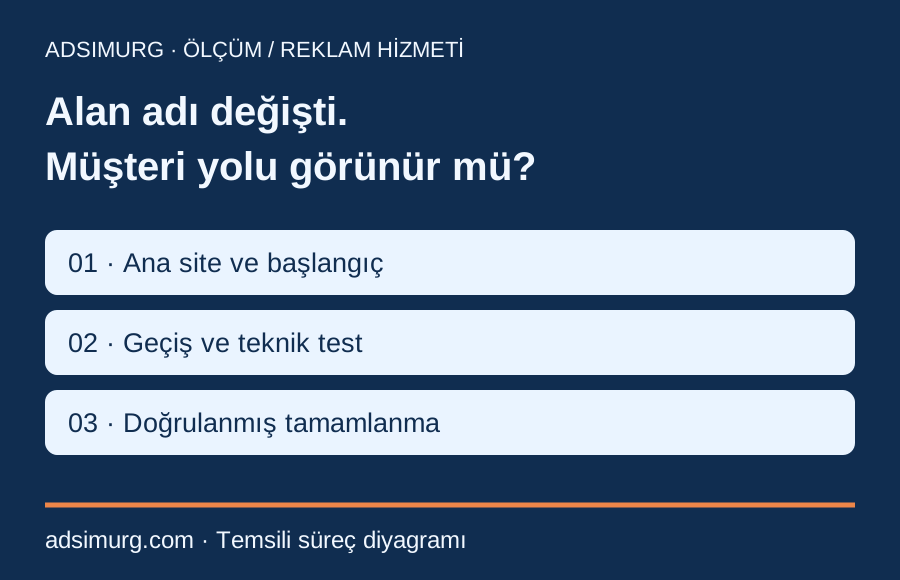
Document the starting page, domain handoff and real completion point first. Where suitable access exists on both domains, validate cross-domain measurement technically. An outbound click is not a completed payment or booking. State any unobservable stage clearly in reporting.
| Stage | Check | Decision record |
|---|---|---|
| Main website | Actual advertising destination | Campaign and page |
| Domain handoff | Access and redirects | Owner and test result |
| Completion | Verifiable business record | Success, cancelled or unknown |
Map the customer journey before changing settings
The main website and a booking or payment system may have different owners. Reviewing each screen separately can hide the middle of the journey. At the start of an advertising service project, record real links, domains, owners and the expected conversion together. Test direct entry, the button-led handoff and the return destination separately. Do not assume that every third-party page permits a measurement tag.
Verify technical requirements against the official guide
Google’s cross-domain guide describes using the same web data stream tag ID on the relevant pages. The _gl parameter is one technical checkpoint during link navigation, and redirects can remove it. Its presence alone does not prove complete measurement accuracy. Test it alongside consent conditions and actual event records. Use the official guide linked below for current implementation details.
Illustrative test: from a service page to a separate booking system
Imagine a consultancy whose website sends visitors to a separate booking system. A tester reads the service scope, selects an available time and reaches confirmation. Record these steps and the observed result. A click on the time-selection button is not a completed consultation. Keep test records separate from customer enquiries. This is an illustrative workflow rather than client evidence or a claim that an integration is installed.
Test abandonment as well as success
A single successful run is not a complete test. Observe returning to the previous page, refreshing and leaving without completion. If a real booking or order ID exists, use that record to review duplicates rather than inventing identifiers. The form measurement test guide supports separate duplicate-event checks. Do not include card details or private customer information in a test report.
Do not describe inaccessible stages as measured
If a provider does not offer suitable access, record that limitation. A website exit, a provider-reported completion and a sales-team-confirmed result are different evidence. Do not assign a sale to a campaign without a reliable connection. Use only necessary information in CRM follow-up and mark unknown sources as unknown. This guide does not authorise broader account access or changed privacy settings.
Make campaign decisions with the test record in view
Include the measurement change date in reporting. Avoid treating figures collected under different measurement scopes as directly comparable. Review qualified enquiries and business outcomes separately. Move observed page failures into a conversion improvement worklist. An owner, test address, expected event, actual result and review time provide a practical starting record.
A starting checklist
- Are domains and owners listed?
- Is actual completion defined?
- Is tag access verified?
- Were redirects and returns tested?
- Are cancellations and duplicates separate?
- Are unknown sources explicit?
- Is the change date recorded?
The Adsimurg approach
Adsimurg connects advertising campaigns with destination pages, measurement scope and CRM outcomes. A free Advertising and SEO audit can identify priorities for technical tests and customer journey improvements.
Explore the relevant service scopes to put this plan into practice: Paid marketing, Landing pages & CRO, CRM & sales operations.