The short answer
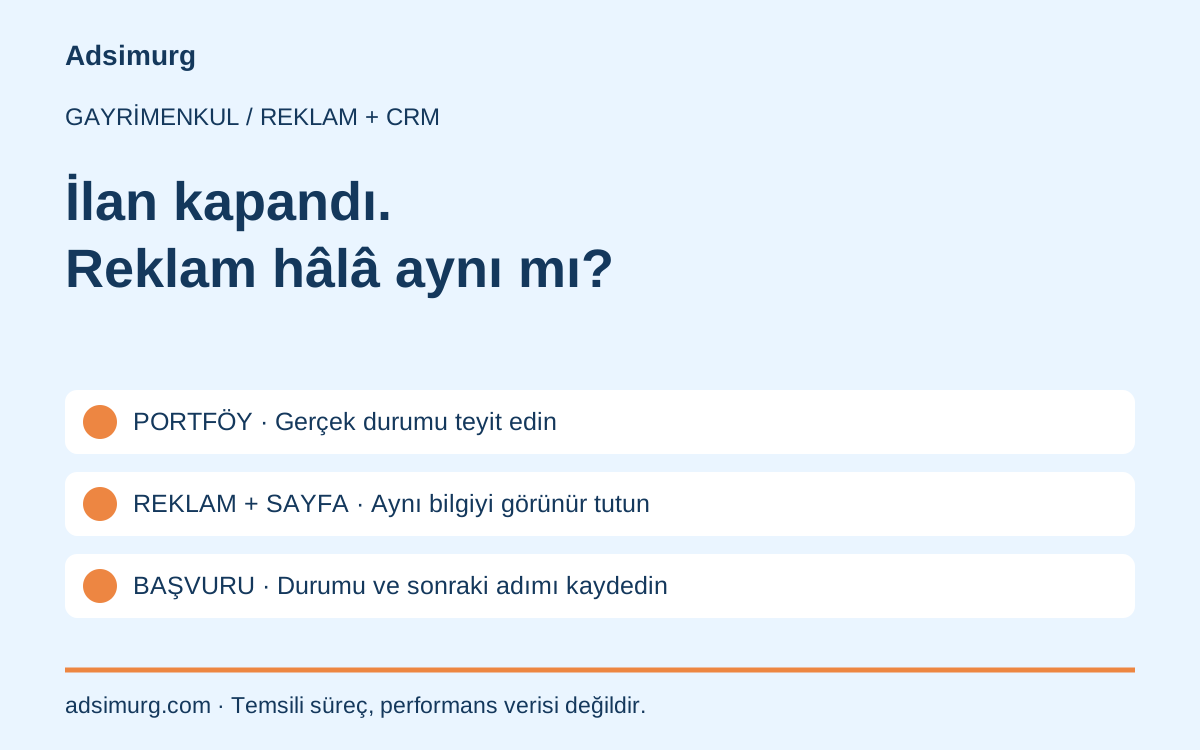
If a property is no longer available, do not keep presenting the old listing as an active offer in advertising. Confirm its status with the responsible person, then align the advertisement, destination and enquiry response. Offering an alternative should not imply that the original property remains available.
| Status | Advertising and page review | Enquiry record |
|---|---|---|
| Active and verified | Actual offer and correct form destination | Property reference and viewing stage |
| Unconfirmed | Avoid new availability assumptions | Confirmation owner and time |
| Closed | Do not present the old offer as available | Status explanation and next step |
| Genuine alternative | Explain how it differs from the original | Enquirer interest in the new option |
Assign an owner and a last-checked time to property status
Sales or lettings staff and the advertising team may be different people. Define what “active” means: still available, under discussion or awaiting confirmation. Do not treat one person’s last message as a definitive status for the whole portfolio. A property identifier, status, change time and owner make a useful starting record. This operational example is not an assessment of title, authority or legal eligibility.
Explain how a general advertising rule applies to the workflow
Google Ads prohibits promising unavailable offers or offers that are not easily found on the destination. A functional, usable destination is a separate requirement. Reviewing ads and pages together when property status changes is our application of those general principles to real-estate operations; it is not a mandatory platform property template. Do not guarantee policy approval for a particular listing.
Changing the headline alone may leave an outdated offer elsewhere
When a property is sold or let, review the active advertising that promotes it. Information embedded in images, captions, sitelinks and landing pages can remain in different places. Silently sending an old link to an unrelated property can undermine the expectation created by the advertisement. State which information no longer applies and which genuine alternative service remains available. Past-property images can remain as correctly labelled portfolio references where use is authorised.
Illustrative example: an office is let while viewings are still being arranged
Imagine an agency collecting enquiries for a specific office floor. When the letting is completed, the team closes its property record. The advertising owner reviews active material for that listing, while the page owner updates availability and the enquiry invitation. Earlier enquirers are told the current situation; interest is checked before discussing a different option. This is a fictional workflow, not an Adsimurg client case or a measured result.
Keep decision-relevant information visible on the page
If the property remains active, its appropriate location description, property type, verified features and current offer conditions should agree across the journey. Leave uncertain details unconfirmed instead of guessing. A page saying only “message for details” may lose information promised by the advertisement. A website and conversion review should check whether a phone visitor can identify the property and whether the form carries the correct listing reference.
Connect each enquiry with the updated property status
A repeat question about an old listing is not automatically a new customer. Within the CRM workflow, separate enquiry date, property reference, status communication and next step. Do not publish personal contact details or private customer conversations in comments. An enquiry that stalls because a listing closed does not by itself establish poor advertising targeting. If the cause is not confirmed, keep it unknown.
Review older links as well as newly added listings
Open the advertisement’s destination on a phone. Check that status, visible price or conditions, images and form destination agree. Review whether old creative remains in another ad group or a saved draft. Record when corrections were made. Keep enquiries separate from suitable viewings and verified business outcomes. The listing-to-viewing enquiry guide adds the communication process to this freshness check.
A starting checklist
- Confirm status with its owner.
- Review the active ad and destination together.
- Check outdated prices, conditions and imagery.
- Do not present closed listings as available.
- Test that the form retains the correct property reference.
- Do not automatically count repeat enquiries as new customers.
- Record change and review dates.
The Adsimurg approach
Adsimurg considers property advertising alongside listing pages and enquiry follow-up. A free Advertising and SEO audit can review one property’s ads, destination and CRM journey to identify practical improvements in freshness and consistency. It does not guarantee sales, lettings or search visibility.
Explore the relevant service scopes to put this plan into practice: Paid marketing, Landing pages & CRO, CRM & sales operations.