The short answer
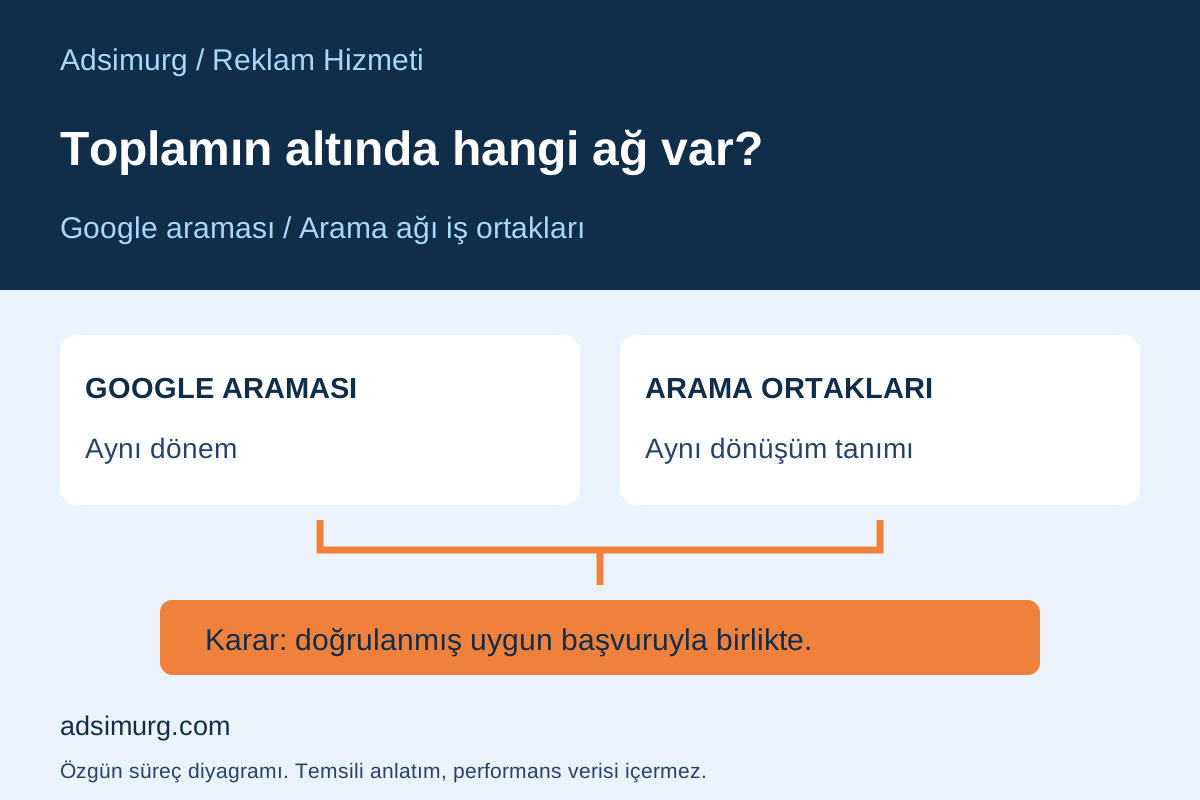
No. A campaign total can hide differences in traffic quality across networks. Verify the current scope, use comparable reporting and assess the business’s actual enquiry outcomes before deciding.
| Stage | Evidence to record | Avoid this inference |
|---|---|---|
| Scope | Actual setting and date | The campaign name defines coverage |
| Comparison | Same dates and conversion definition | Cheap clicks mean good customers |
| Quality | Verified qualified enquiry | Every form is an opportunity |
| Decision | Reason, owner and review date | One setting guarantees results |
Verify the current network scope
A campaign name containing Google does not establish that every impression occurred on Google Search. Google’s official guide explains that search partners can include different sites and placements and are included by default when a Search campaign is created. That does not establish the current setting in your account. Read the authorised campaign’s setting and record its identifier, selection and verification time. This article does not imply that an account setting has been changed.
Put separate rows beside the total
Review the available network breakdown in campaign or ad-group reporting. Google’s reporting guidance describes Network, with search partners, as a way to compare Google Search and search partners. Use the same dates, currency and conversion definition. Do not compare the last week in one row with the previous month in another. If the breakdown is unavailable, document the reporting scope and missing access rather than inventing a split.
Distinguish a cheap click from a suitable enquiry
In a fictional B2B maintenance business, both networks might generate forms. The sales team still distinguishes out-of-area requests, support questions from existing customers and new maintenance enquiries. This example is not a client case or performance evidence. In the paid marketing review, compare click costs with consistently defined qualified enquiries and documented conversations. If the source cannot be reliably matched to an enquiry, do not claim network-level sales performance.
Resolve measurement uncertainty first
Duplicate form events or missing sales statuses undermine the comparison. Review the actual event definition and the site’s measurement guides. A row with no reported conversions is not definitive evidence of no value until reporting coverage and possible delay have been considered. With a small sample, the status of one enquiry can change the interpretation. Do not invent a universal sample threshold or waiting period, and keep unknown outcomes distinct from verified failures.
Connect the decision to a dated record
Document the business objective, observed evidence, open question and next review date. If the authorised team changes coverage, record when implementation actually happened. Changing the offer, page, budget and network together prevents a clean explanation of which factor mattered. The reporting process should make those changes visible. Choose according to the evidence and sales capacity rather than automatically enabling or disabling partners for every business.
A starting checklist
- Read the current network setting.
- Compare the same reporting period.
- Keep conversion definitions consistent.
- Verify enquiry quality separately.
- Do not guess missing source matches.
- Date changes and follow-up reviews.
The Adsimurg approach
Adsimurg assesses network coverage, conversion tracking and business outcomes together. A free Advertising and SEO audit can review your campaign decision card. A network selection does not guarantee lower costs or sales.
Explore the relevant service scopes to put this plan into practice: Paid marketing, Growth strategy & analytics.