The short answer
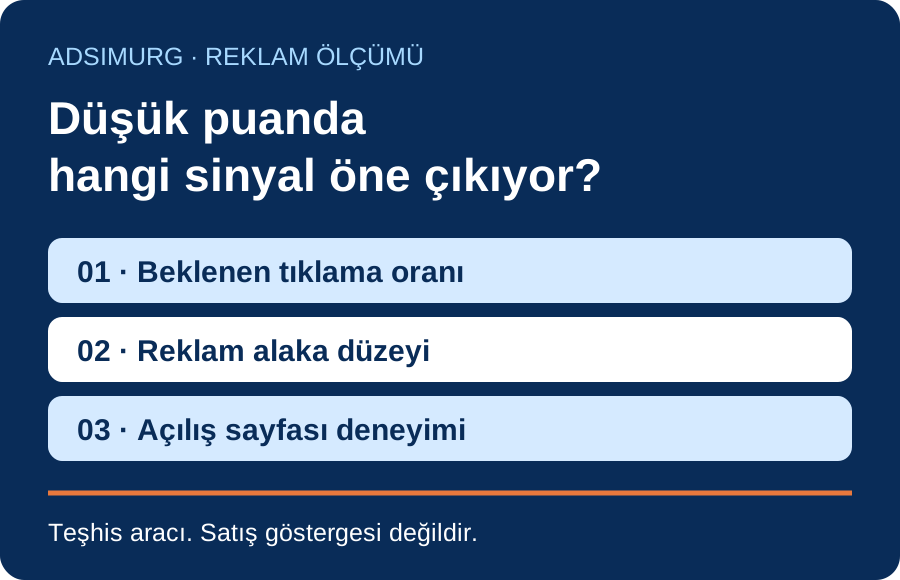
First identify the component signalling a problem: expected clickthrough rate, ad relevance or landing page experience. Then review the actual search need, advertisement and destination together. Quality Score is a diagnostic tool, not a sales metric or a score directly used in the ad auction.
| Component | Initial review | Outcome check |
|---|---|---|
| Expected clickthrough rate | Does the message explain the searcher’s need? | Relevant traffic and genuine enquiries |
| Ad relevance | Do the search need and offer match? | Search context and enquiry suitability |
| Landing page experience | Does the page fulfil the ad promise? | Mobile usability and enquiry journey |
Read the score within its limits
Google describes Quality Score for Search campaigns as a keyword-level diagnostic rated from 1 to 10. Its three components can be above average, average or below average. Google says the score should not be treated as a key performance indicator or an auction input. Avoid turning reporting into a competition to raise the score. Adsimurg recommends connecting diagnostic signals to the actual question a customer needs answered.
Start by writing the customer’s question
Choose a keyword and describe the problem behind it in one sentence. A phrase can reflect price research, product selection or an immediate service need. Which intention does the ad address? Search term review helps establish context. Making a headline more attractive does not solve irrelevant intent. Place the keyword, offer and destination side by side.
Assess a clickable message alongside enquiry suitability
If expected clickthrough rate signals an opportunity, check whether the headline explains the service, scope and next step. This is an editorial review recommendation, not a promise that a change will raise the score. Stating a service actually provided may be a clearer starting point than a generic solution-partner message. Avoid unsupported discounts, speed or outcome promises. If additional clicks bring more out-of-scope enquiries, do not judge success by clickthrough rate alone.
Look for a gap between the ad and destination
For relevance or landing page experience, check whether the advertised offer appears near the beginning of the page. Visitors should not have to search menus to find it. Clarify scope, suitability and the enquiry step. In website and CRO review, examine mobile headings, readability, form errors and link behaviour. Repeating a keyword throughout the page is different from answering the visitor’s question.
Review a fictional service advertisement
Imagine an SME advertising e-commerce conversion tracking setup while sending visitors to a general agency homepage. First verify that the service is provided and define its scope. A relevant page can then explain the systems reviewed, the distinction between setup and checking, and how enquiries are assessed. Instead of changing the headline and page simultaneously, choose one decision question using a test plan. This example contains no account data or client result.
Record changes without assuming a link to sales
Document the keyword, initial signal, change, date and evaluation question. Use the score and components for diagnosis; review suitable enquiries, meetings and sales separately as business outcomes. Avoid firm conclusions from small samples. A clearer page may leave the score unchanged; a higher score does not establish a commercial result. Advertising Service reporting should support the next concrete decision.
A starting checklist
- Is the component signalling a problem identified?
- Is the actual search need clear?
- Do the ad and page describe the same offer?
- Is the mobile page usable?
- Has the business verified its claims?
- Are the change and evaluation question recorded?
- Are the score, suitable enquiries and sales read separately?
The Adsimurg approach
Adsimurg reviews ad messages, landing pages and measurement together. A free Advertising and SEO audit can examine low-scoring keywords alongside the actual enquiry journey.
Explore the relevant service scopes to put this plan into practice: Paid marketing, Landing pages & CRO.