The short answer
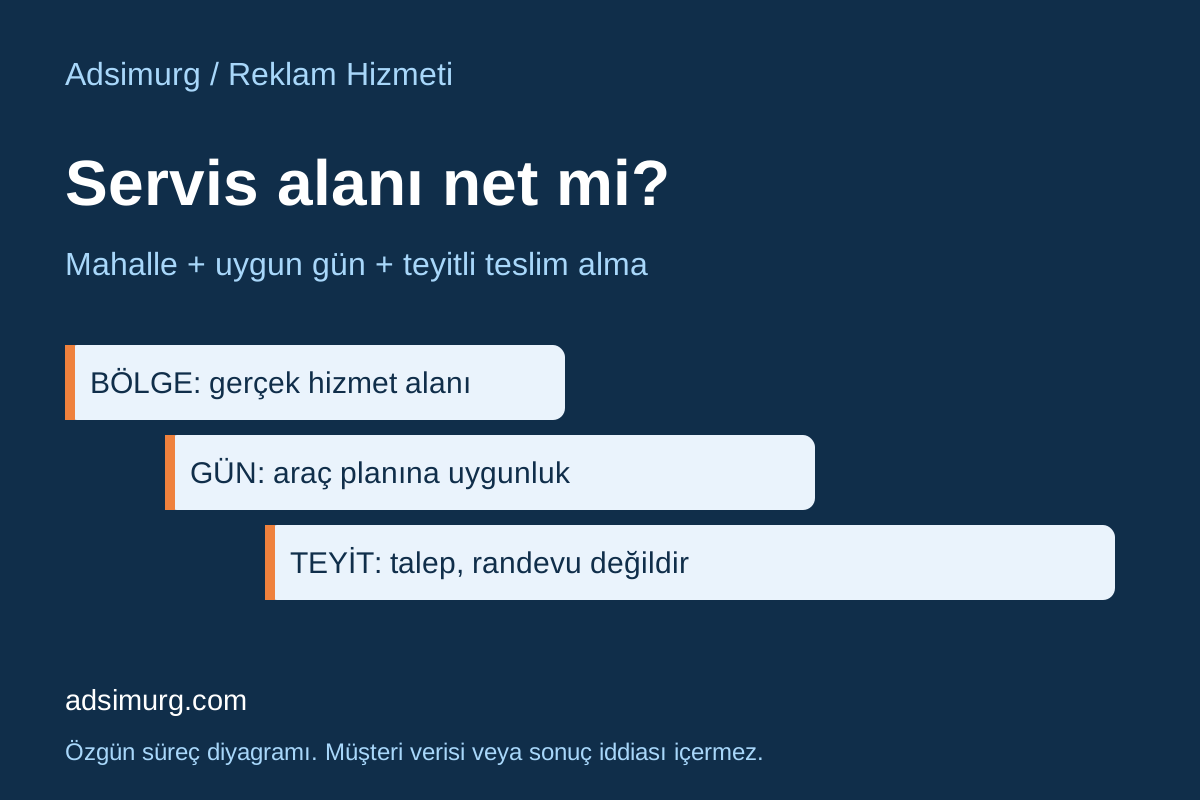
Carpet cleaning advertising should explain where the business actually operates and how pickup is confirmed. A neighbourhood enquiry is not a vehicle booking or a completed service. The ad, landing page and operational record should reflect the same conditions.
| Kontrol / Check | Kayıt / Record | Ayrım / Distinction |
|---|---|---|
| Area | Neighbourhood and day | Citywide promise |
| Enquiry | Scope and preferred time | Confirmed booking |
| Operations | Actual vehicle plan | Form submission |
| Outcome | Completed service | Revision counted as new client |
Build the target area from the actual pickup plan
Confirm the neighbourhoods served, available days and excluded areas with the business. If coverage does not extend across the city, avoid creating that expectation in the creative. Include the person responsible for capacity updates in the paid marketing brief. Establish what the team should tell enquirers when availability changes. An ad appearing on someone’s screen does not establish that a collection vehicle has space that day.
Do not treat location targeting as a service commitment
Google Ads describes geographic targeting options including countries, areas within countries and a radius. Google also explains that location uses several signals and is not guaranteed to be completely accurate. Check the actual enquiry’s service area separately. Reviewing targeting settings does not prove every enquiry will come from a suitable neighbourhood or that the business can collect from every address. The operating team must still assess the request against real coverage.
Explain pricing logic and acceptance conditions on the page
A landing page should describe which carpet types can be assessed, what information is needed to determine a price and how a collection request becomes confirmed. Publish only business-verified conditions. Do not hide special-material, size or additional-treatment requirements behind an unrestricted promise. Avoid unverified claims about stain removal, hygiene or health outcomes. Authorised photographs and an accurate description of the process are more useful than fabricated success stories.
Limit the first form to information needed for assessment
An approximate service area, carpet type, approximate scope and preferred time window can provide a starting point. Do not request a full home address in public comments; necessary details belong in an authorised private process. Following W3C’s form guidance, clearly identify required fields and expected input formats. Selecting a time window should not look like automatic appointment acceptance. Explain the business’s confirmation step on the form completion screen so the person knows what happens next.
Connect a neighbourhood-day example to the customer journey
Imagine a business collecting from neighbourhood A on Tuesdays. A person seeing the ad on Monday should see the actual enquiry and confirmation process instead of receiving an unsupported promise of same-day collection. This fictional example contains no particular price, turnaround or performance claim. Record why an enquiry cannot be served, such as location, scheduling or service scope. Those distinctions can identify information missing from the page without treating every unsuitable enquiry as a campaign failure.
Reconcile reporting with completed work
In the sales and service record, distinguish a new enquiry, a serviceable request, a confirmed collection and work completed and returned. A customer changing the collection day is not automatically a newly acquired customer. Compare campaign reporting with accessible operational outcomes instead of relying only on submitted forms. Writing a CRM status does not establish that the advertising platform received it. If an integration exists, its supported setup and actual transfer need independent verification.
A starting checklist
- Verify actual service coverage.
- State days and capacity clearly.
- Explain material and pricing conditions.
- Label form fields clearly.
- Separate requests from bookings.
- Check duplicate records.
- Report completion independently.
The Adsimurg approach
Adsimurg connects local service advertising with landing pages and operational follow-up. A free Advertising and SEO audit can assess the enquiry journey for one service area. Advertising visibility does not guarantee collection or a service outcome.
Explore the relevant service scopes to put this plan into practice: Paid marketing, Landing pages & CRO, CRM & sales operations.