The short answer
Adding Google and Meta attributed revenue does not produce total store revenue. Check whether channels claim credit for the same sale, how dates are reported and what the value includes. Use the order system for actual sales and advertising reports to assess channel attribution.
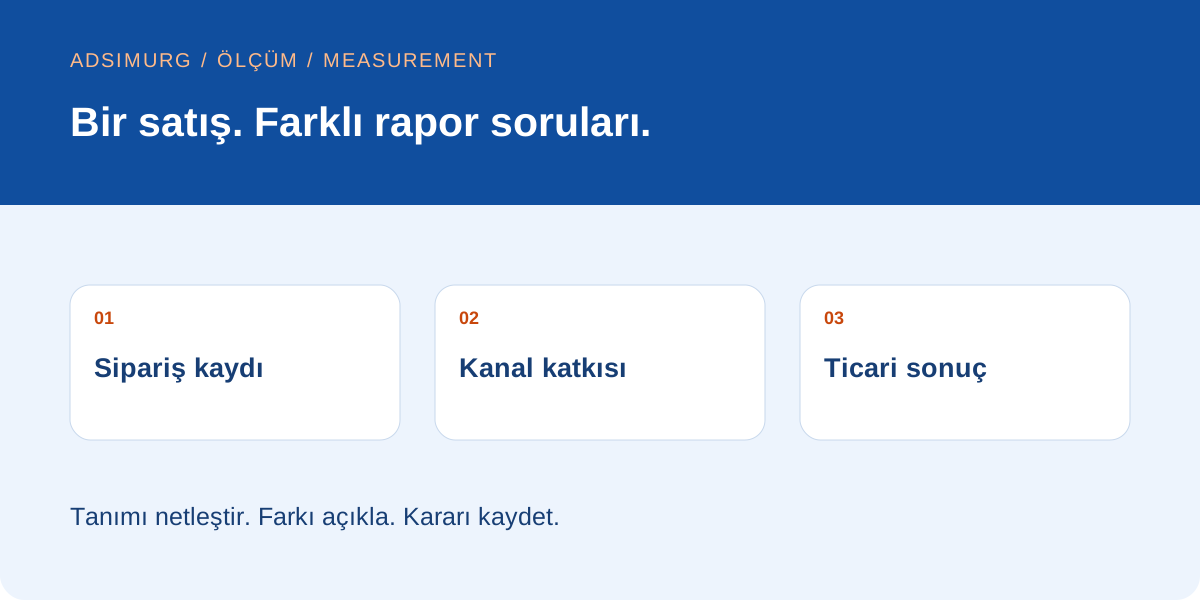
| Record | Question | Check first |
|---|---|---|
| Store orders | Which orders actually occurred? | Payments, cancellations, returns and revenue scope |
| Advertising platform | Which sales does the platform attribute to advertising? | Selected event, attribution and window |
| CRM / sales record | Which commercial stage did an enquiry reach? | Unique person, opportunity and outcome definitions |
Define the scope behind each metric
A conversion can mean an order in one report and a form or add-to-cart event in another. Record the platform, event, reporting column and currency in your starting table. Does order value include tax and delivery? Are cancellations deducted? Document the answer. Store revenue, attributed advertising revenue and profitability answer different questions. Aligning these definitions belongs before budget decisions in an advertising management engagement.
Compare date logic as well as the calendar range
Google explains that reporting based on advertising interaction dates can differ from reporting by conversion time. Record the date basis and time zone, and avoid treating recent figures as final immediately. A conversion window specifies the period after an interaction during which a sale can be recorded. Read the actual account settings rather than borrowing another account’s defaults. The objective is to explain differences, not force reports to display identical totals.
Illustrative journey: two ads, one order
Consider a fictional customer who discovers a product through a social ad, later returns through a search ad and places one order. Each platform may attribute a contribution under its own rules. Do not therefore add their reported sales values as though they were the store’s actual total. Keep the unique order record separate from channel attribution. This is an illustrative workflow, not an Adsimurg client result or a measured journey from a specific account.
Investigate the pattern of a discrepancy
Does the difference affect every product, one payment method or mobile journeys? Did it begin after a tracking or checkout change? Test whether refreshing the confirmation page sends the same order again. Review early event firing, incorrect value fields and mismatched identifiers separately. Avoid transferring personal customer information into advertising reports. Our marketing reporting guide helps connect metric definitions to decisions.
Turn reconciliation into a decision log
Keep confirmed sales, cancellations, returns and net revenue separate on the order side. Record advertising spend, the selected conversion and attributed revenue in their own columns. Assign an explanation, owner and next check to each discrepancy. If a duplicate post-payment event is confirmed, repair that flow before changing audiences, creative and budgets together. With CRM and sales tracking, report progression from enquiry to conversation and sale separately from form volume.
Choose the evidence for budget decisions
Platform reporting supports optimization; commercial review also needs store and cost records. Revenue may rise while returns or delivery costs change. New-customer acquisition and repeat purchases need distinct interpretation. Record what data remains incomplete and which test comes next. Defining this measurement vocabulary in the campaign brief can make later review discussions more productive.
A starting checklist
- Separate orders, forms and smaller actions.
- Record date basis, time zone, currency and windows.
- Do not add platform revenue as total store revenue.
- Check duplicate events, cancellations and returns.
- Assign an explanation, owner and review date to each discrepancy.
The Adsimurg approach
Adsimurg connects advertising management with conversion tracking and commercial review. When requesting a free Advertising and SEO audit, describe the reports you want to compare so that we can clarify their scope. An assessment does not promise identical platform totals or a specific revenue increase.
Explore the relevant service scopes to put this plan into practice: Paid marketing, Growth strategy & analytics, CRM & sales operations.