The short answer
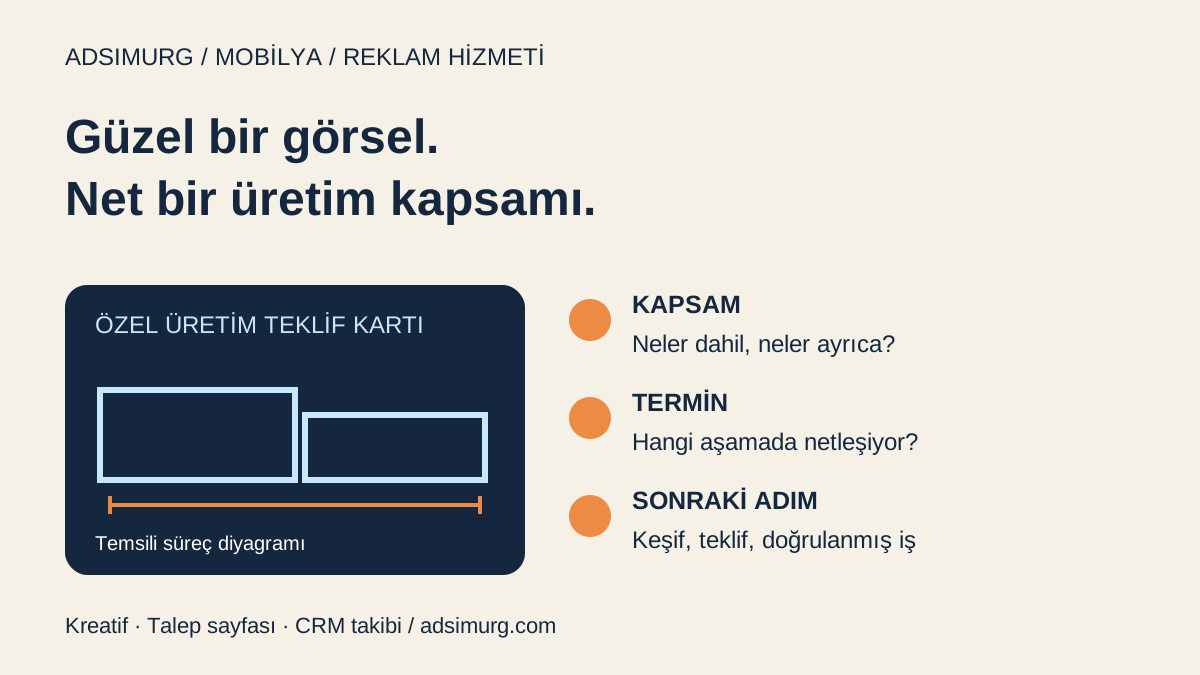
A made-to-order furniture ad should explain more than the finished appearance. Clarify the work the business can provide, what is needed for a quotation and when the delivery estimate becomes firm. Do not transfer a ready-stock delivery promise to a custom project. Track the enquiry, survey or measurement, approved quotation and completed work separately.
| Enquiry | Initial explanation | Separate follow-up outcome |
|---|---|---|
| Ready-stock product | Actual model, availability and delivery conditions | Suitable order |
| Custom dimensions | Feasible work and measurement process | Completed survey or measurement |
| Material comparison | Real sample and available options | Sample review and project fit |
| Quotation approval | Included work, current conditions and verified timing | Approved quote and completed work |
Do not mix a stock question with a custom-project enquiry
Someone who needs a wardrobe immediately and someone fitting a study into a sloping wall may like the same photograph but need different answers. A stock enquiry requires actual model availability and fulfilment information. A custom project needs a feasible design, materials and a defined process. State which enquiries the workshop can serve in the advertising brief. Do not advertise services the team cannot provide merely to collect more enquiries.
Explain lead time through its conditions
Delivery timing depends on the workshop’s real production plan. Agree which steps affect it, such as design approval, final measurement, material availability and installation preparation. Avoid turning uncertain projects into one universal delivery promise. If an estimate is offered, explain its current basis and the conditions attached. Communicate a firm date only when the business can verify it. This is guidance for clear marketing information, not a legal contract template.
Separate included work from separately assessed items
For a custom kitchen, cabinet carcasses, fronts, fittings, worktops, transport and installation may have different scopes. Confirm what the business actually supplies. If an advertised starting price and the final project price refer to different scopes, make that distinction visible. Google’s landing-page guidance recommends useful information aligned with the advertisement. The furniture quotation card suggested here is our operational application of that principle, not a mandatory platform template.
Illustrative example: a study unit beneath a sloping roof
Imagine a workshop designing a study unit for an attic. The first image shows a real completed project with permission to use it. The second explains that the design is room-specific, dimensions need on-site verification and cable-routing requirements need discussion. The initial form might ask for the city, project type and approximate need. Do not request detailed home photographs or personal information in public comments. This is a fictional process example, not a client case or measured advertising result.
Use creative testing to reveal different expectations
One creative can show the finished appearance, another the material and usage details, and a third the journey from survey to installation. In visual and video production, recolouring one photograph does not create three distinct ideas. Record which message produces relevant project questions and which mainly attracts ready-stock price requests. Do not attribute higher sales to an image without adequate evidence and a meaningful comparison.
Learn why an enquiry did not progress
Keep the initial need, service-area fit, survey status, quotation date and next action separate in the CRM record. If a customer is waiting because of timing, do not label it a price objection. Without an explanation, the reason remains unknown; silence does not establish budget or intent. Review actual surveys, suitable quotations and confirmed work alongside message counts. A repeat enquiry from the same person is not automatically a new customer.
Review the ad and page when production conditions change
If new orders or material availability affect the offer, do not continue an outdated promise automatically. Confirm the scope the team can now provide and review active visuals, copy and the enquiry page together. Earlier completed projects can remain in the portfolio without implying the same delivery timetable is currently available. Assigning an owner for scope updates helps the sales team communicate consistent information.
A starting checklist
- Separate ready-stock and custom-project promises.
- Explain the service area and work available.
- Check timing against the real production plan.
- Make material, transport and installation scope visible.
- Verify image authenticity and usage permission.
- Separate surveys, quotes, work outcomes and unknown loss reasons.
The Adsimurg approach
Adsimurg connects furniture advertising with visual presentation, enquiry pages and sales follow-up. A free Advertising and SEO audit can review one product group’s promise, delivery information and quotation journey to identify practical priorities. The furniture visual and landing-page guide provides complementary planning detail.
Explore the relevant service scopes to put this plan into practice: Paid marketing, Visual design & video production, Landing pages & CRO, CRM & sales operations.