The short answer
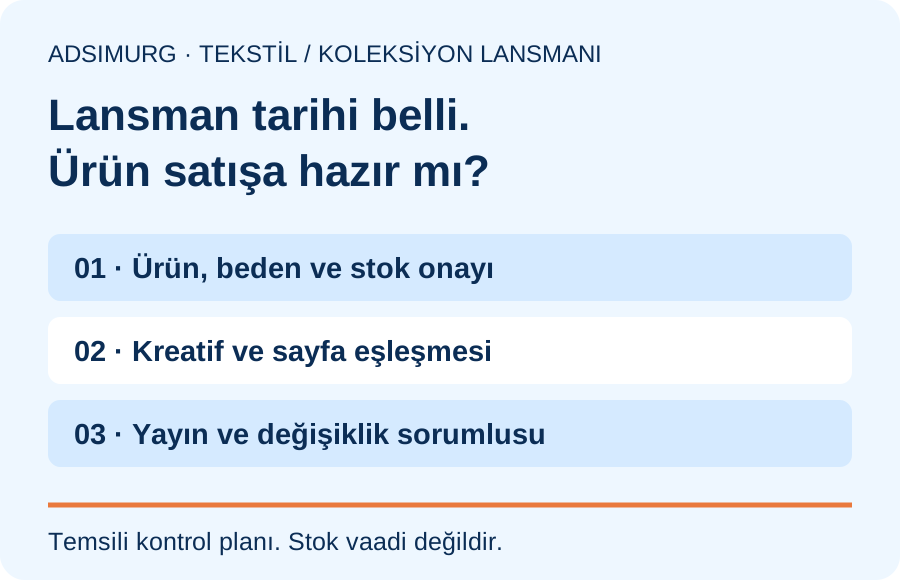
Identify products and variants that are ready to sell, then connect creative work and publishing dates to them. The advertised product, sizes, price and delivery information should be current on the landing page. Decide in advance who revises or stops affected advertising when stock changes.
| Area | Business approval | Advertising decision |
|---|---|---|
| Product and variants | Sizes and colours ready to sell | Show actual available choices |
| Stock and delivery | Current availability and timing | Limit promises to eligible products |
| Product page | Price, size information, photography | Link to the advertised product |
| Change owner | Person supplying current information | Document revision / pause action |
Tie the launch date to product readiness
Photography may be complete while warehouse intake or a product page is still unfinished. A date alone is not a readiness check. A small work list can distinguish ready-to-sell products, information pending and not approved for advertising. This does not require buying new software. In the Advertising Service plan, connect the media schedule to this list and avoid stock or delivery promises the business has not confirmed.
Turn the collection message into one product decision
Rather than squeezing every product into one graphic, help the customer make an initial choice. For a shirt, show the real fabric appearance, cut and a use scene. Support size information with verified product measurements. In creative production, treat the overall season announcement and a focused product story as different test ideas. Do not invent customer reviews, popularity or a best-seller label.
Let the page fulfil the advertised choice
When an ad shows a specific product, make that product easy to find. Display actual photography, current price, size guidance, availability and the business’s applicable delivery explanation. Google describes landing page experience in relation to useful, relevant information and the expectations created by an advertisement. Our application is to compare ad and page before launch. Website and CRO work should check mobile size selection, adding to cart and the presentation of unavailable variants.
A fictional small-collection workflow
Imagine two shirts and one pair of trousers. One shirt has all sizes ready; two sizes of the second are unavailable; the trousers still need an updated measurement table. The first product can launch with approved information. The second should clearly show available choices. The third waits until the missing information is supplied. This fictional example contains no actual brand or inventory data. Its purpose is to prevent a single launch date from overriding accurate product information.
Make stock changes reach the advertising owner
At a daily or appropriate business cadence, the product owner updates available choices and the advertising owner reviews affected creative and links. If the product is entirely unavailable, consider a pause or an approved alternative instead of directing the same photograph to an unrelated category. Do not promise an uncertain restock date. If automation is needed, define accurate inputs, notification responsibility and a manual intervention route first. Do not describe an unfinished integration as operational.
Review business and operational outcomes together
Ad clicks, product views, cart additions and completed orders are different events. If variant availability changes during a test, document the change. Real size and delivery questions can guide the next content. Review cancellations and returns separately; advertising does not explain every change by itself. The guide to platform conversions and store revenue clarifies measurement limits. Use evidence and actual customer questions to choose the next product or message test.
A starting checklist
- Is the ready-to-sell variant list approved?
- Does photography show the actual sale option?
- Are price and delivery information current?
- Has mobile size selection been tested?
- Does the ad link to the same product?
- Is the stock update owner identified?
- Is revision / pause responsibility documented?
- Are orders, cancellations and stock effects separated?
The Adsimurg approach
Adsimurg coordinates apparel advertising, creative work and product pages in a shared publishing plan. A free Advertising and SEO audit can assess product readiness, advertising messages and the mobile purchase journey for your collection launch.
Explore the relevant service scopes to put this plan into practice: Paid marketing, Visual design & video production, Landing pages & CRO.