The short answer
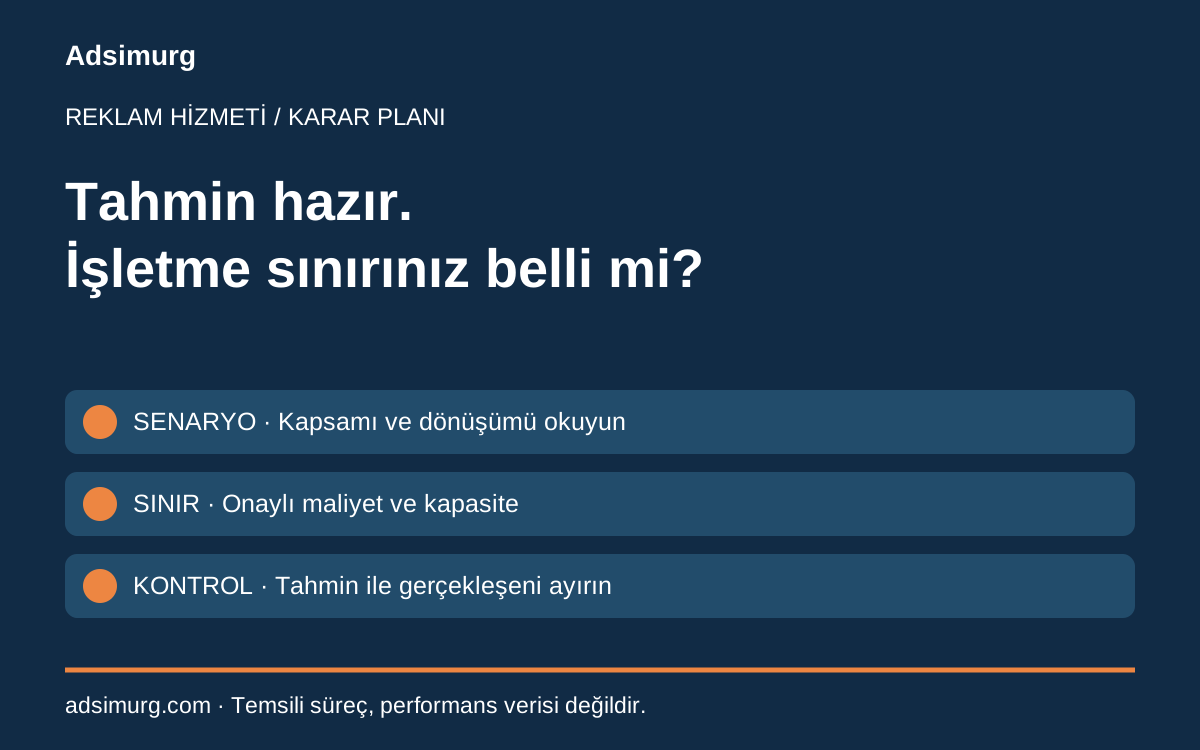
A Google Ads simulator estimate is not a commitment that a spending change will produce the same outcome. Record the campaign, period, conversion definition and scenario first. Compare that information with the cost and enquiry workload the business can support. If a change is proposed, define its authorisation, limits and later review separately.
| Field | Record | Keep separate |
|---|---|---|
| Screen scope | Campaign, strategy, date and alternative setting | Other campaigns |
| Outcome definition | Measured event and value scope | Assumption that enquiries are sales |
| Business limit | Authorised cost and response capacity | Platform estimate |
| Review | Actual spend, outcomes and change notes | Future performance guarantees |
Write down the question before reading the estimate
“Will we get more customers?” is too broad. The screen may concern a bid, budget or target change. Record the campaign, bidding strategy, current setting, alternative and observation date together. Do not combine scenarios with different scopes. A paid marketing plan starts with the business outcome being assessed; being able to open a simulator does not itself justify changing a setting.
Separate the platform estimate from the operating plan
Google explains that simulators use campaign and auction information to estimate alternative settings. Availability is conditional, and limited data can prevent an estimate. Absence of an estimate does not by itself establish an account problem or a need to launch another campaign. Do not add a number to a presentation if it is not present in the actual interface. This guide does not assume the same simulator is available for every account or campaign type.
Confirm what the conversion represents
A form, a click on a telephone link and a confirmed order are different outcomes. Ask the measurement owner which event is selected. Google notes that conversion definitions and changes to conversion tracking can affect interpretation of the estimates. Record any recent form or tagging changes alongside the decision. The primary and secondary conversion guide helps clarify the target scope.
Illustrative application: compare enquiries with quotation capacity
Imagine a B2B team where the person reviewing enquiries also prepares technical quotations. A scenario suggesting more forms does not establish that the team can prepare more suitable quotes. Check service fit and response capacity first. This is a fictional process example, not a client case or a numerical performance claim. If the team cannot describe its current workload limit, making that capacity visible may be a more useful first action than raising spend.
Add the business constraint to the scenario
Place the business-approved spending limit, cash-flow constraint and review owner beside the estimated cost. Do not build a revenue forecast by treating every estimated conversion as a sale. Keep actual enquiries, suitable conversations, quotations and sales separate in the CRM record. These fields are our suggested decision practice, not a mandatory Google template or a recommendation for a particular budget.
Recording a scenario is different from applying it
Taking a screenshot, accepting a suggestion and changing campaign settings are different actions. An analyst without change authority should communicate the scenario and reasoning. Agree who can apply a change and within what scope. If the message, destination and measurement change at the same time, attributing a later difference to a single budget decision becomes harder. The campaign experiment decision guide helps frame a meaningful comparison.
Keep estimates and actual results in separate columns
At the review date, read actual spend and outcomes using the same definitions. If results differ from the scenario, examine changes in period, measurement, offer, stock or team capacity before assigning a cause. Leave unexplained causes unknown. One strong period does not establish permanent sales growth. Explain whether to continue, investigate or stop using the agreed operating limit and observed evidence.
A starting checklist
- Verify availability in the actual account.
- Record the campaign, date and compared setting.
- Confirm the conversion definition.
- Note measurement changes and missing information.
- Name the spending limit and decision owner.
- Separate change authority from scenario review.
- Compare estimates and actual results within the same scope.
The Adsimurg approach
Adsimurg evaluates advertising plans alongside creative, measurement and sales follow-up. A free Advertising and SEO audit can identify unclear targets, reporting definitions and decision records. The advertising budget planning guide adds an operating framework for these choices.
Explore the relevant service scopes to put this plan into practice: Paid marketing, Growth strategy & analytics, CRM & sales operations.